My spring coat is finally finished! While it’s too late for spring, I hope that by wearing it in fall the feeling of summer will be extended a bit. This was a big project!  I decided to copy an old favorite unlined coat. I always pull it out between seasons because the single ply of wool is the perfect weight, but it’s grey and looks a little blah in spring. However, the oversized fit gives enough room for anything from dolman sleeves to another layer beneath. To celebrate spring, I wanted embroidered poppies around the hem of the coat. I looked all over for the set of embroideries I evisioned in my mind, but to no avail. Just as I was giving up, my neighbor’s poppies began to bloom! I have software. I can draw. YES, I can do this!
The first step was to take some snapshots of her poppies. I wanted red poppies and some were golden, but as long as the values are there you can change the color later. The second step was to simplify the photograph into a line drawn cartoon. This needed to be done since the number of embroidery threads used should be kept down to a reasonable number. I have a single thread embroidery machine, so I need to rethread for each color and the final embroideries have about 14 colors.
  The third step is to scan the freehand cartoon and open it up as a layer in a drawing program like Adobe Illustrator, then complete a vector drawing. The embroidery software I purchased from Husqvarna Viking has a drawing module that is fairly simple to use, but I’m used to the feature rich Illustrator. This part takes awhile, at least for me. I spent time fussing around with the composition by moving the flowers, changing their sizes and even moving flowers from one photo to another to balance. There are three separate embroideries on the coat plus some small designs for the buttons and the collar.
 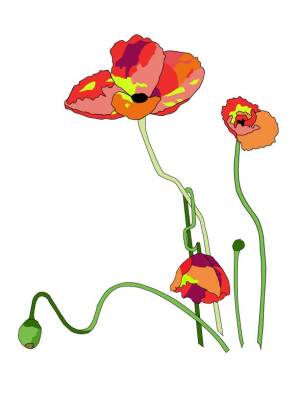 I make all of this sound very straightforward but the truth is I’d never attempted such a complex project, and most steps had to be done more than once. The good thing is that I continued to find faster ways to accomplish my goals. Next time should be much more efficient!
After the drawing is done the embroidery software takes over. The basics of the software are incredibly easy. Just point your mouse to an area and the software will fill that area with the embroidery pattern of your choice! Of course, that wasn’t good enough for me…I wanted shading, and the stitches to change direction on the petals, and satin stitch on the stems, and different weights of black outline. You get the picture, I basically nerded out for hours, and here are the final stitch outs before I put them on my coat.


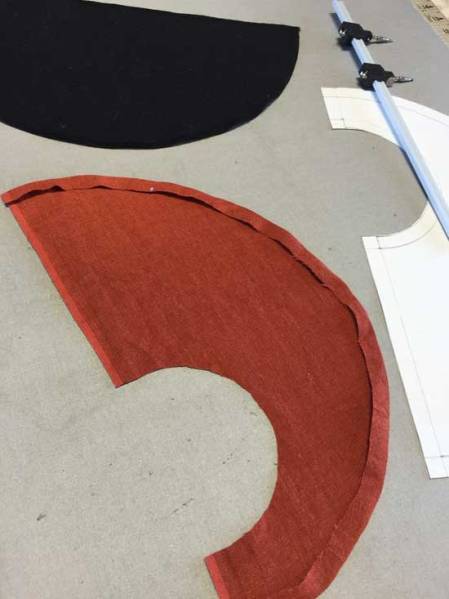
I didn’t want the back of the embroidery to show inside the coat, and I was running out of fabric! I found a length that was uneven along the top and almost the width of the bottom hem. I then let this found shape lead me to the placement of the embroideries and the curve of the pocket. I like letting the fabric make decisions for me, and I think the pockets came out better than the straight ones that I’d planned. If you look closely you can see the bottom hem is actually two layers.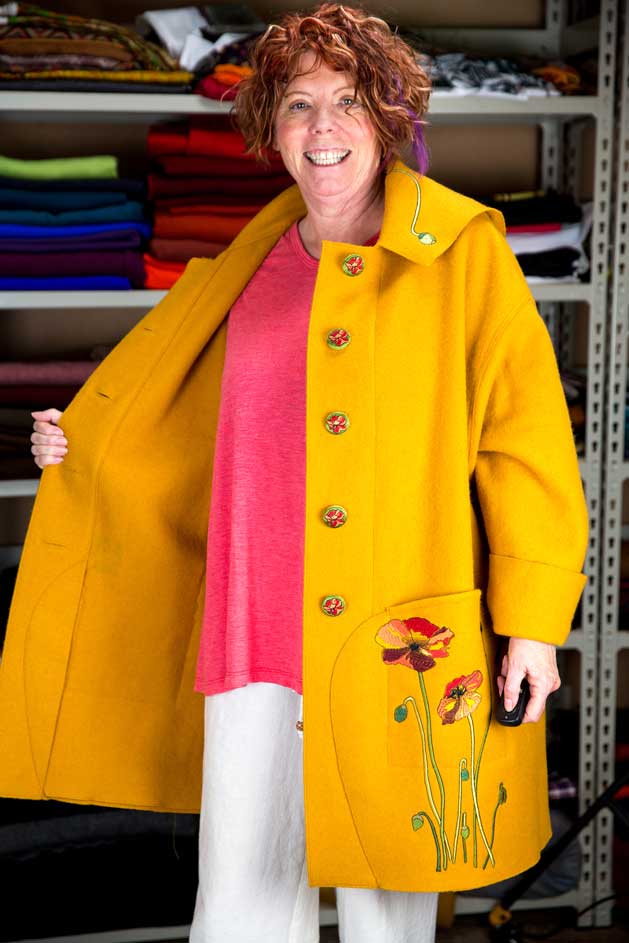

I also designed matching embroidered buttons!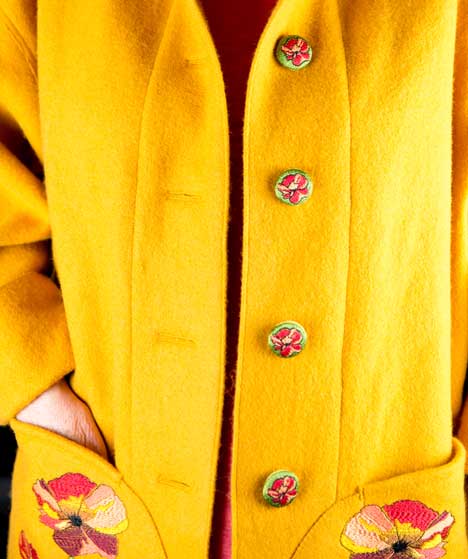
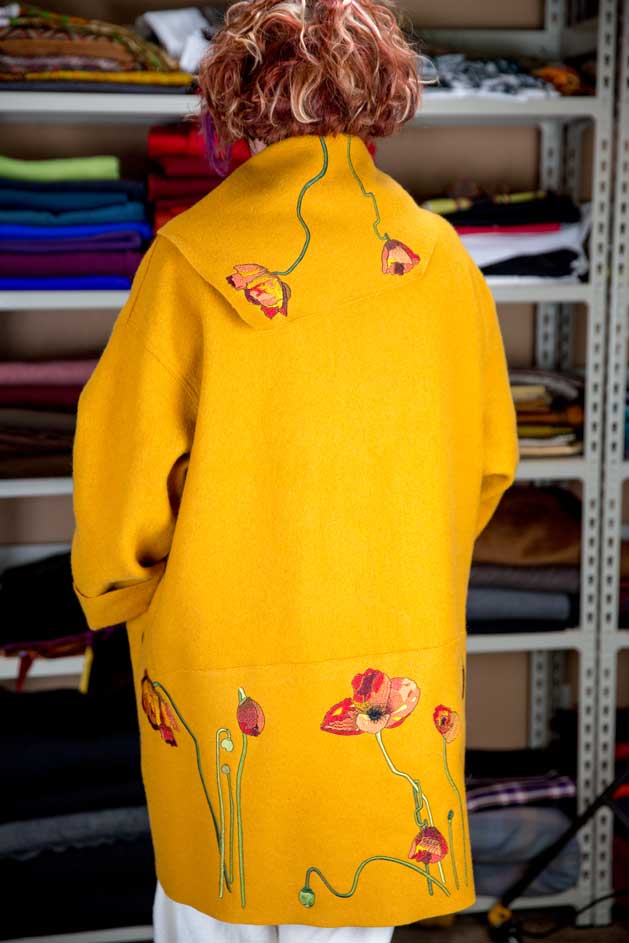
For the asymmetrical collar, I copied a few of the previously designed poppies and had them land in the corners. Now all I have to do is wait for some cooler weather!
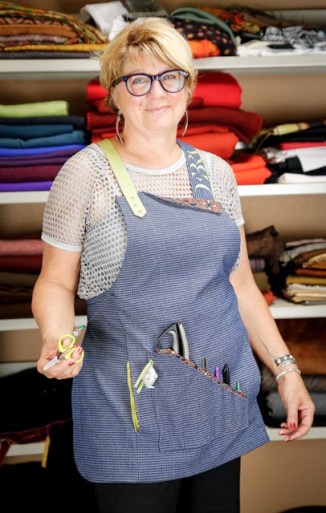
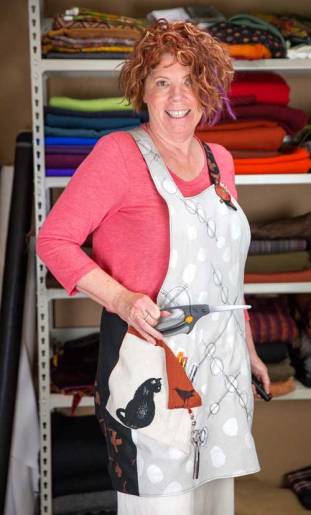
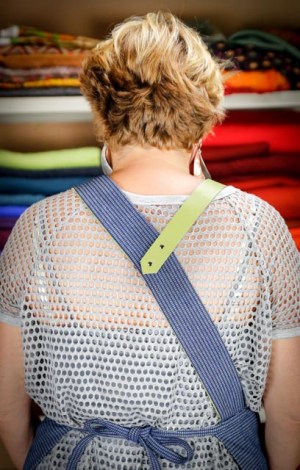


 Since I like to embroider with my machine, I digitized a drawing of my tomato pincushion and placed the embroidery on my shoulder to hold pins. The dot fabric has some free-motion embroidery and I added some color to the black fabric with the help of some Diane Ericson stencils. The linen cat fabric came from Elfriede’s Fabrics and the crow is also from a Diane Ericson stencil.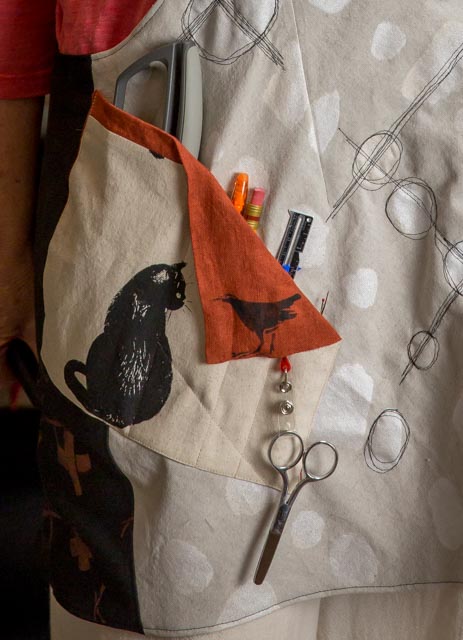
 The other linen pieces come from my stash and were made into a rectangle of pieced fabric that I then draped on Roxanne. Cool, this is going to be easy!
 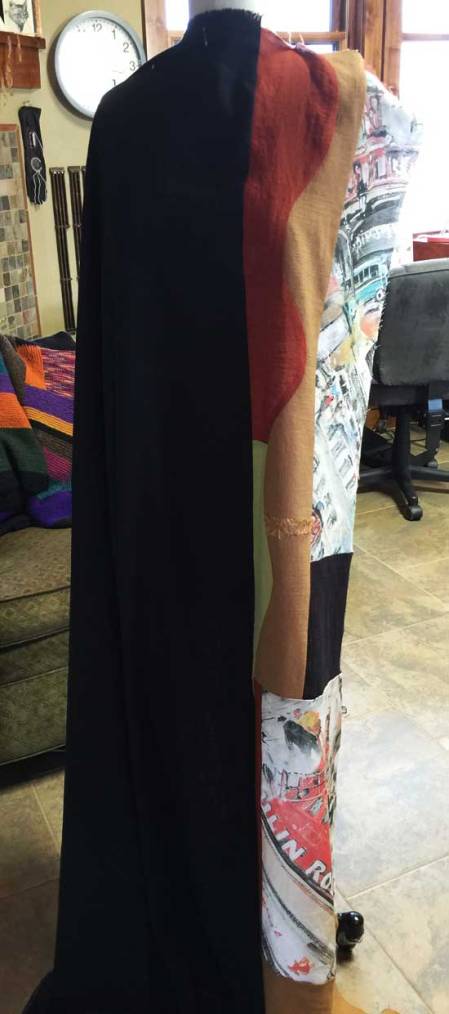 The back panel also needed to have a mix of fabrics so I decided to make a diagonal slice on the patchwork piece to make a wedge for the back. This seemed like a great idea and here is the back panel on the floor. However, all the angles started getting confusing on such a large project.
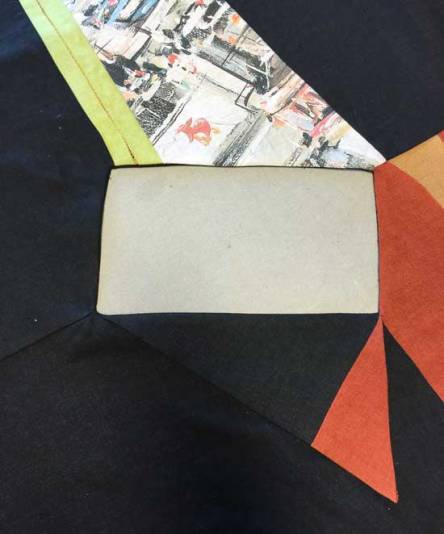
 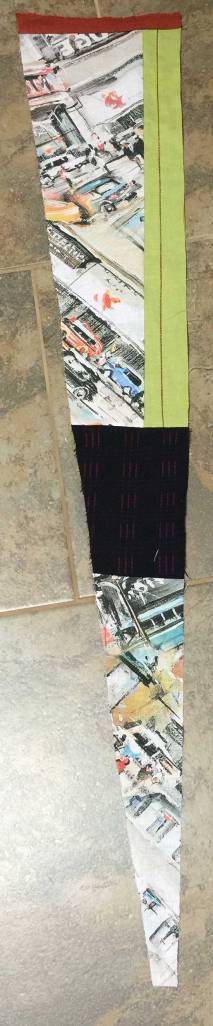 A shirt would have been much easier to manipulate, but I persevered adding more black linen until I had back and front rectangles to form the caftan. After sewing the shoulders it was time to look at the neck. It’s difficult to see, but I’m intrigued with this idea of a turned rectangle to form an asymmetrical neck. The shoulder seam is the black to black seam starting on the lower left hand side of the photo. The other shoulder continues diagonally across the rectangle to the upper the right hand side of the photo. Unfortunately, in the end the neck was too big, and I’m not a big fan of my bra straps showing. I played around with the neck later and came up with a solution, but I would love to perfect this idea in another project.
 So at this point the project looks cool on Roxanne so I try it on. It looks terrible on me!!! Too much fabric…we’re talking full size tent, and it’s heavy! Time to start chopping!
  I decide that instead of a classic rectangular caftan that I will just cut into the sides forming sleeves as you can see in this photo of the back.
 This reduced the bulk by about half so I decided to focus on a pocket. I’m very fond of how the pocket came out. However at that point the caftan still fit poorly. The photo below is after all the tweaking, and you can see I lost a little of the pocket opening when I took more out of the sides.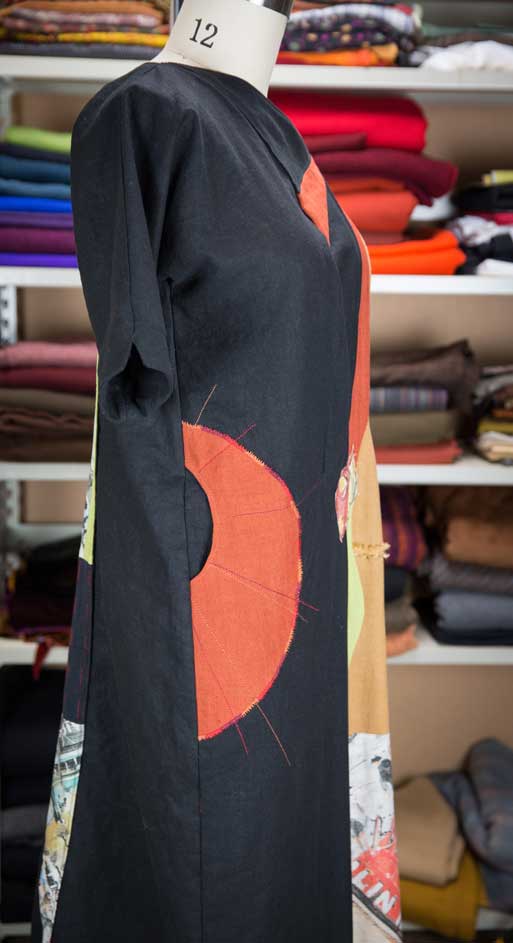
 You can also see how I resolved the neck. Hopefully it looks intentional…The outfit is fun, I will wear it and most of all I enjoyed the process and learned a lot!
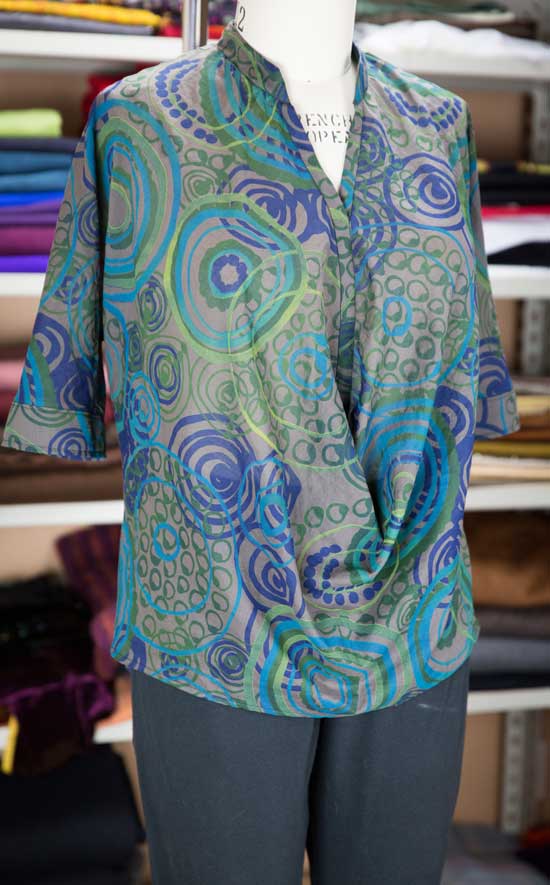 I’m back to sewing and blogging! Summer always poses wardrobe difficulties since fall is my favorite season in both colors and weight of fabrics. I’m determined to have a summer wardrobe one of these years, but while I started planning summer sewing in February, life got in the way. I have a spring coat that I’m still working on, but it’s a long slow project that I’m savoring so it’ll get done sometime soon. Hint: machine embroidery is involved.
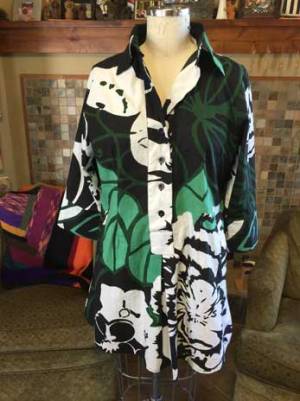
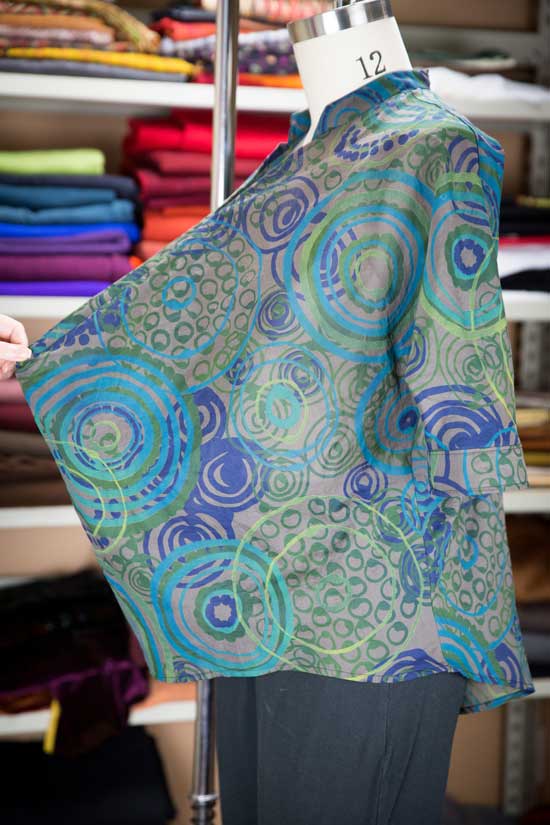 Isn’t this an interesting idea? The front basically ends up on the bias at the placket. Drafting this pattern was difficult, since the original shirt kept shifting around. This front idea is what I wanted to capture and beyond that, I made quite a few detail changes from the original.
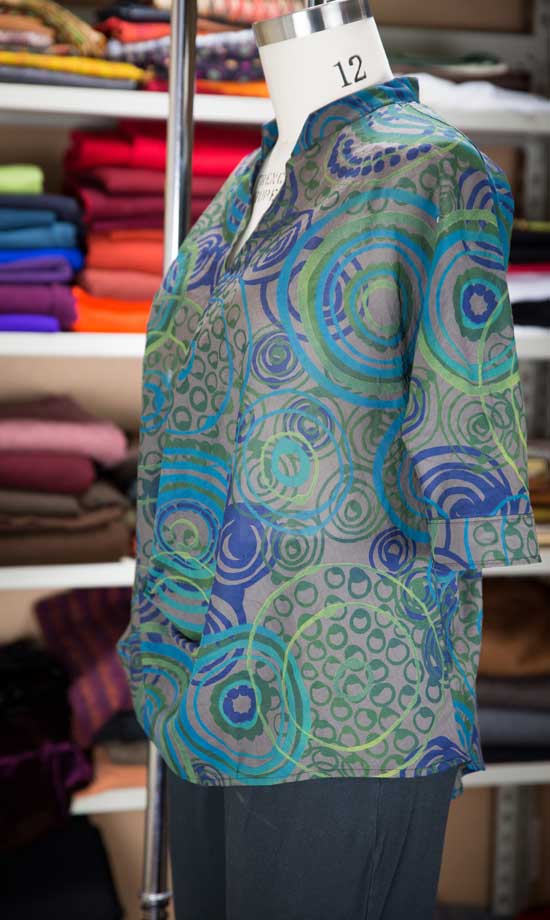 I may add some false buttons on the placket. I usually sew plackets up even on RTW that I’ve purchased. I’m just more comfortable knowing I don’t have to watch out for gaposis at the bust!The back pleat adds to the airiness of this top, which you barely feel while wearing. I find it slightly disconcerting and as I said before a little more weight to the fabric will feel better. I am wearing this “muslin” but I think there is great potential in the future. The body pattern is only two pieces so there is room for fabric play. Hope I have time this summer to make another!
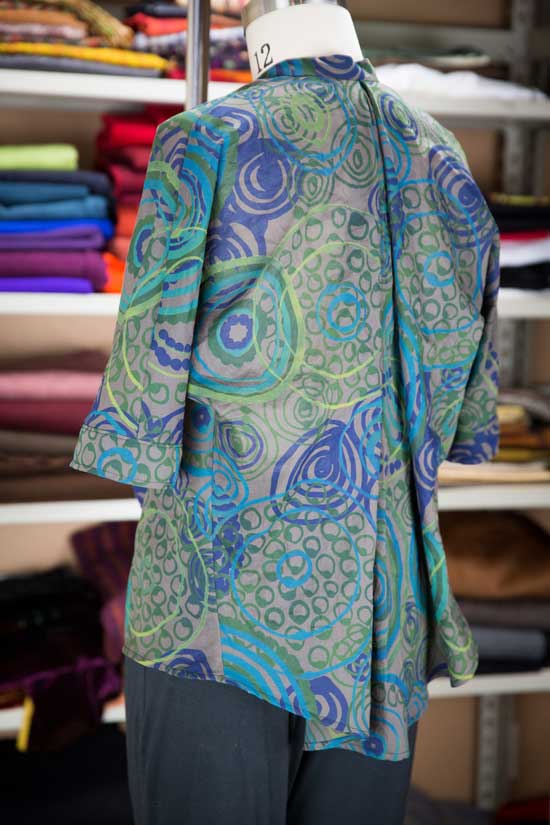 The back pleat adds to the airiness of this top, which you barely feel while wearing. I find it slightly disconcerting and as I said before a little more weight to the fabric will feel and look better. I’m wearing this “muslin” but there is great potential future iterations. The body pattern is only two pieces so there is room for fabric play. Hope I have time this summer to make another!
 I will be sharing some spring sewing on my next blog. It’s time to welcome the warm weather!








 To add complication, I decided to make a pattern from my favorite shirt shown on the left. There are two of these are in my closet in different colors. I’ve only drafted a pattern a few times, and never with a complex piece of clothing (darts, pleats, placket, pockets). The drafting went well, but the first muslin was too small. I know it looks great on Roxanne, but she is the size I want to be. LOL

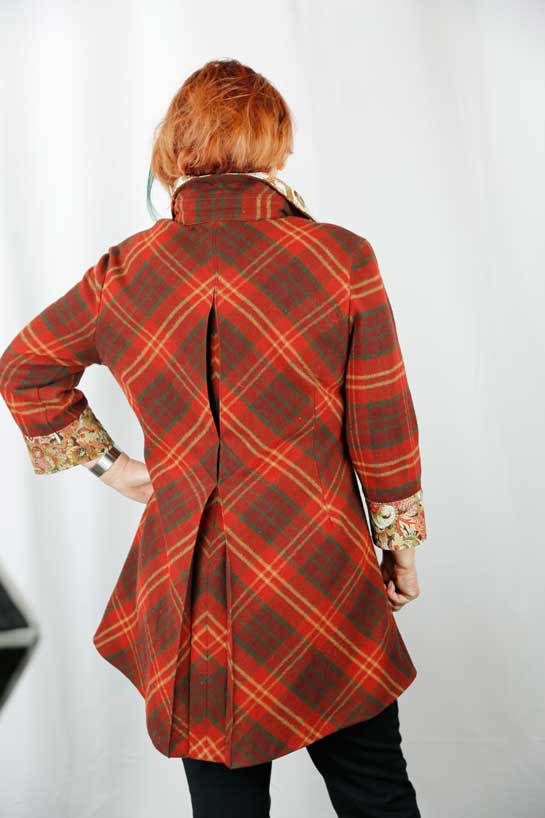
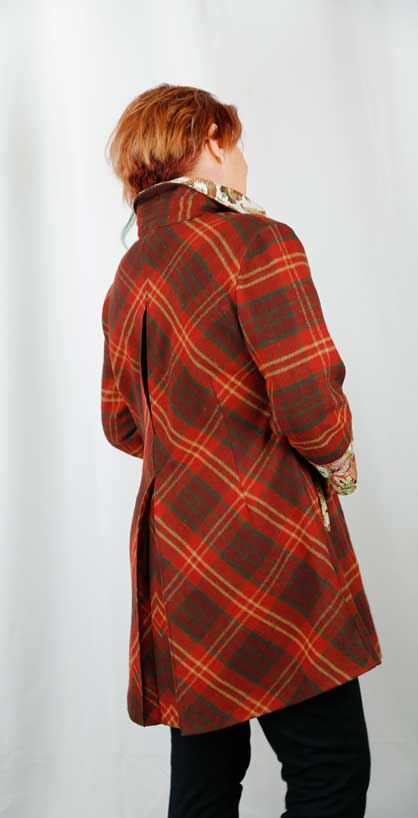
 The final desire was an interesting back pleat, and on the diagonal. The uneven plaid was tough to match in back, but at least I avoided matching the sides.

 The grey and black tunic from Soft Surroundings (bottom right) is the closest to the shape I want, but I love the bias pleats of the Alexander McQueen shirt (top right). The shapes of these two shirts aren’t completely compatible since the McQueen shirt would be boxy in shape.

 West Zen Studio